The quiet I remember
In my childhood, Kainchi did not feel like a destination. It was simply part of our lives. We could enter Maharajji’s temple and stand or sit there for however long we wished. Nobody hurried us. We left when we felt ready. I did not know then that this freedom would become one of the things I missed most.
Kainchi today is very different. People come from across India and around the world. During busy daytime hours, darshan moves quickly. Sometimes it feels like playing peek-a-boo with Maharajji: one brief glimpse, folded hands, and then it is time to move ahead.
The thought makes me smile, but there is sadness within it too. I am happy that so many people want to know Maharajji. I would never suggest that Kainchi should be kept only for those who knew it earlier. I can welcome those discovering it today and still miss the quiet that surrounded us then.
How the world found Kainchi
Maharajji’s name had already travelled far through people who spent time with him, including Ram Dass, Krishna Das and Larry Brilliant. Steve Jobs came to Kainchi in 1974 hoping to find Maharajji, but Maharajji had already left his body. Years later, Mark Zuckerberg spoke about visiting an Indian temple on Jobs’s advice. Julia Roberts has spoken about being drawn to Maharajji after seeing his photograph, and Virat Kohli and Anushka Sharma have also visited Kainchi.
These are not all the same kind of connection. Some people sat with Maharajji. Some arrived after he had left his body. Others were drawn to him through a photograph or stories. Maharajji did not become important because famous people found him, but their stories introduced his name and Kainchi to millions of people.
When cinema comes close to home
Now cinema is carrying the story further. Hanuman Ansh traces Maharajji’s journey through different periods of his life, his years of tapasya and the path that eventually leads to Kainchi. I never met Maharajji in the body. I know him through my family, photographs, stories and his presence in my life.
Cinema comes even closer to my family through Shree Baba Neeb Karori Maharaj. Hiten Tejwani portrays Rabboo Da, my father’s elder brother, and the film also includes my grandmother, Daadi. For an audience, they may be characters within Maharajji’s story. For me, they are family.
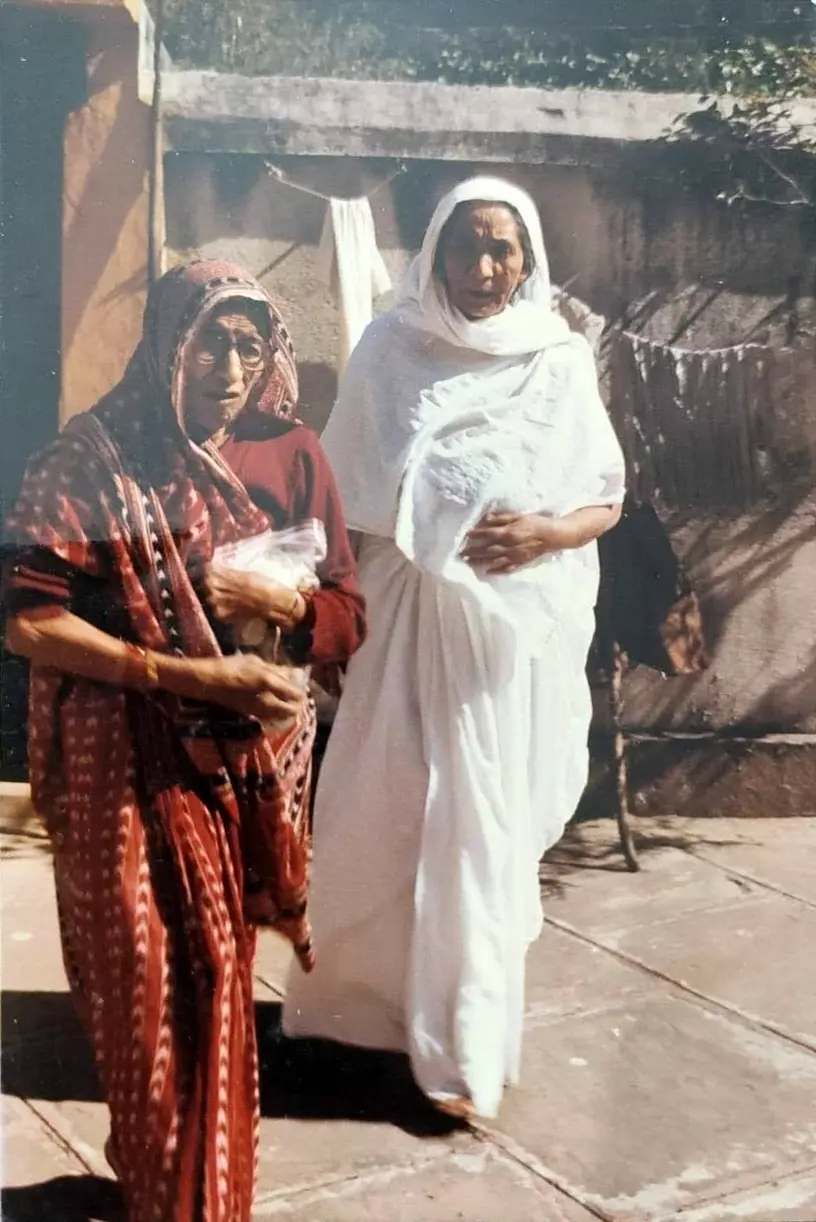
I do not remember Daadi well because she passed away when I was very young. Much of what I know about her comes from stories told by Mom and Mausi, and from a few photographs. There is something strange and emotional about seeing people from your family represented on a screen. A film is not a family record, and I cannot speak for its makers, but that does not leave me untouched.
What I can preserve
Perhaps that is why I feel the need to preserve the Kainchi I remember. This website does not speak for either film, the ashram or any trust. It holds only what is mine to share: ordinary ashram days, Ma and Choti Ma, Dadaji’s small room, our family photographs and the memory of being able to sit quietly before Maharajji. If you want those memories, start with Going to Kainchi and Dadaji’s Room.
Prarthana Preeti belongs to the same personal effort. It is a free, independently published prayer app that keeps 28 traditional prayers close in Hindi and Roman English.
I do not expect Kainchi to return to what it once was. Places change, especially when they become loved by so many people. I only hope that those who arrive because of a famous name or a film find something quieter once they are there, something beyond the crowds, cameras and stories on a screen. If darshan lasts only a few moments, I hope even that brief glimpse of Maharajji becomes a memory they carry for a very long time.