The first room on the left
As soon as one entered the ashram and took the stairs, Dadaji’s room was the first room on the left. The yagya shala was nearby.
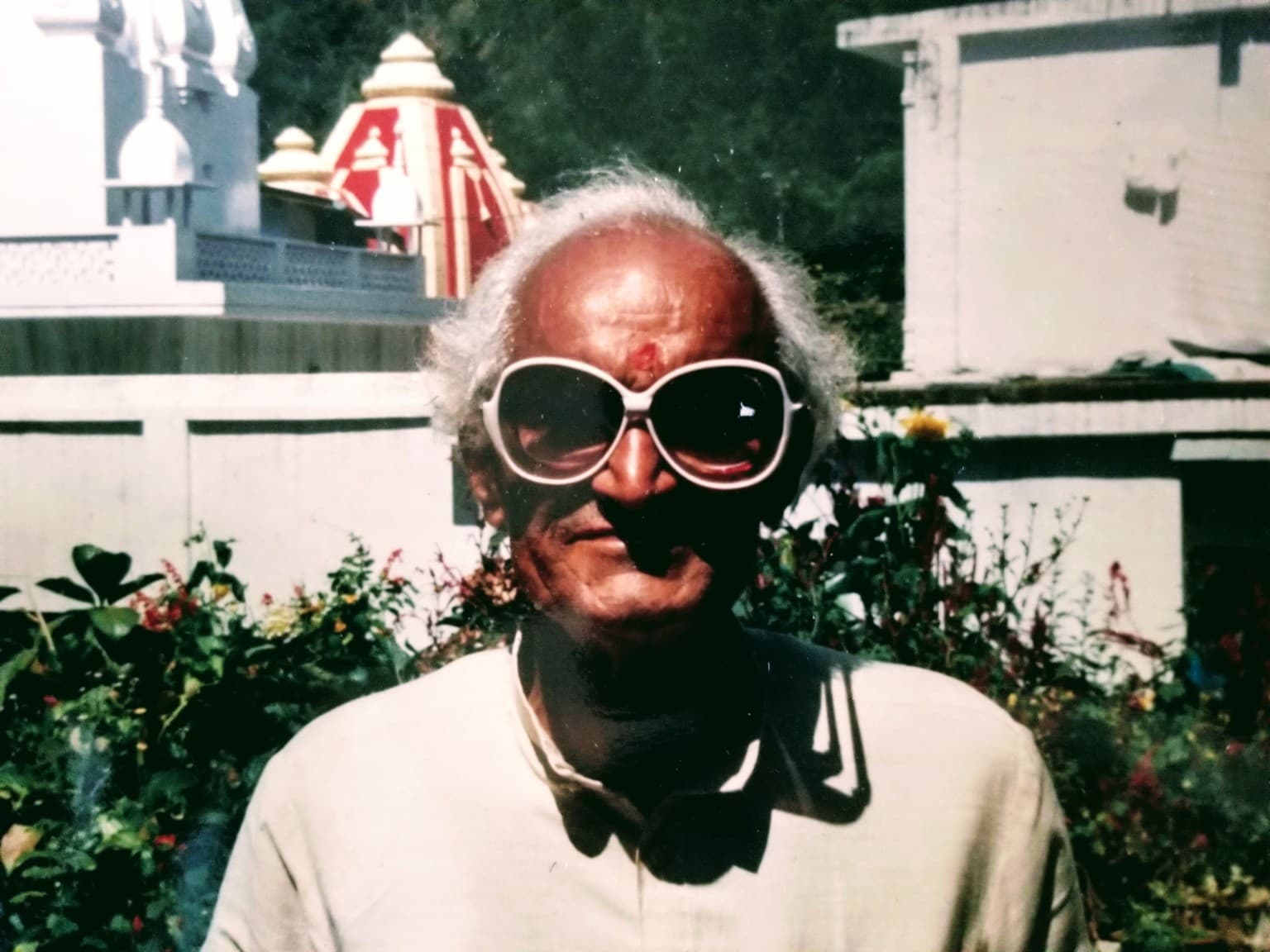
My Dadaji was Shri Hem Chandra Joshi, also known at Kainchi as Hem Da. ‘Da’ means elder brother, but I always called him Dadaji. He lived in that small room alone at first. Later, his younger brother, whom we called Mukund Dadaji or Chote Dadaji, joined him.
There were two beds, one in each corner. Dadaji’s bed was on the right. A wooden shelf held his personal things and a large water bottle stood ready for the natural spring at the back of the ashram.
A room for medicine and company
Dadaji kept the basic medicines needed for everyday ailments. A doctor also stored medicines there because the room served as the ashram’s medicine room.
Everything in the cupboard was properly marked, including the medicine and what it was meant for. I remember a large bottle of Betadine ointment and plasters nearby. I saw Dadaji help with medicines, puja, visitors and the daily chana-prasad distribution.
Dadaji was thin, old and charming. He was very social, and all kinds of people came to meet him. We sat wherever we found space, on the floor, on his bed or on the chair if it was free.
When we visited in the afternoon, he might be sleeping. That did not stop us from going in, hugging him and waking him. He never made us feel that we were troubling him. He told us stories about his own experiences, Maharajji and Dad when he was young.
Namkeen and spring water
Whenever we wanted a snack, we went to Dadaji. The namkeen was kept with his personal belongings on the wooden shelf. Knowing where it was made his room feel even more familiar.
Filling his water bottle was one of the most exciting parts of the day. The spring was behind the ashram and within its grounds. We walked there barefoot. The path was fine in those days, though the ground beneath our feet was not always even.
The spring water was cold. Before filling Dadaji’s bottle, we washed our faces and legs in it. What may have looked like a small errand felt like an adventure. We returned carrying his bottle, pleased that we had done something for him.
The black briefcase
Dadaji had a small black briefcase. Inside it, he kept a handkerchief that had belonged to my grandmother, Daadi.
He never showed it to people or spoke about it. It was simply there. Mom told me one day that the handkerchief had been Daadi’s and that he kept it as her memory.
I do not remember my grandmother well because she passed away when I was very young. Most of what I know about her comes from stories told by Mom and Mausi. The handkerchief was a small link between someone I barely remembered and the man whose room was such a large part of my childhood.
The room in my dreams
I still see Dadaji’s room in my dreams. Sometimes Dadaji is there, asking me to lie down and rest. Sometimes I watch him doing something near his wooden shelf. At other times, the room is there but he is not.
Whenever I visit Kainchi, I look at that room and miss him dearly. Some places remain connected to us long after the people we loved are gone. Dadaji’s room is one of those places for me.